

The Fastest century in T20 cricket is one of the most remarkable achievements in the shortest format of the game. With only 20 overs available, reaching 100 runs at incredible speed requires extraordinary power, timing and consistency. Estonia’s Sahil Chauhan currently holds the record for the fastest century in T20 International cricket, reaching three figures in just 27 balls against Cyprus in 2024.
Table of Contents
The record is particularly remarkable because Chauhan reached his century in fewer than 30 deliveries. His performance became one of the most explosive batting displays in T20I cricket and set a benchmark for power hitters around the world.
Fastest Century in T20 International Cricket
When discussing the Fastest century in T20, the record belongs to Sahil Chauhan of Estonia. He smashed a century from only 27 balls against Cyprus in 2024, setting a new T20I record.
The innings demonstrated how quickly a batter can change a match in T20 cricket. Chauhan combined aggressive stroke play with exceptional six-hitting ability to reach the milestone at an astonishing rate.
Here are the five fastest T20I centuries based on the data provided:
Fastest T20I centuries
Balls required to reach 100 runs by the five fastest T20I centuries in the provided data.09182736Sahil ChauhanMuhammad FahadJan Nicol Loftie-EatonSikandar RazaFinn Allen
| Rank | Player | Team | Balls | Opponent | Year |
|---|---|---|---|---|---|
| 1 | Sahil Chauhan | Estonia | 27 | Cyprus | 2024 |
| 2 | Muhammad Fahad | Turkey | 29 | Bulgaria | — |
| 3 | Jan Nicol Loftie-Eaton | Namibia | 33 | Nepal | — |
| 4 | Sikandar Raza | Zimbabwe | 33 | Gambia | — |
| 5 | Finn Allen | New Zealand | 33 | South Africa | 2026 |
1. Sahil Chauhan – 27 Balls
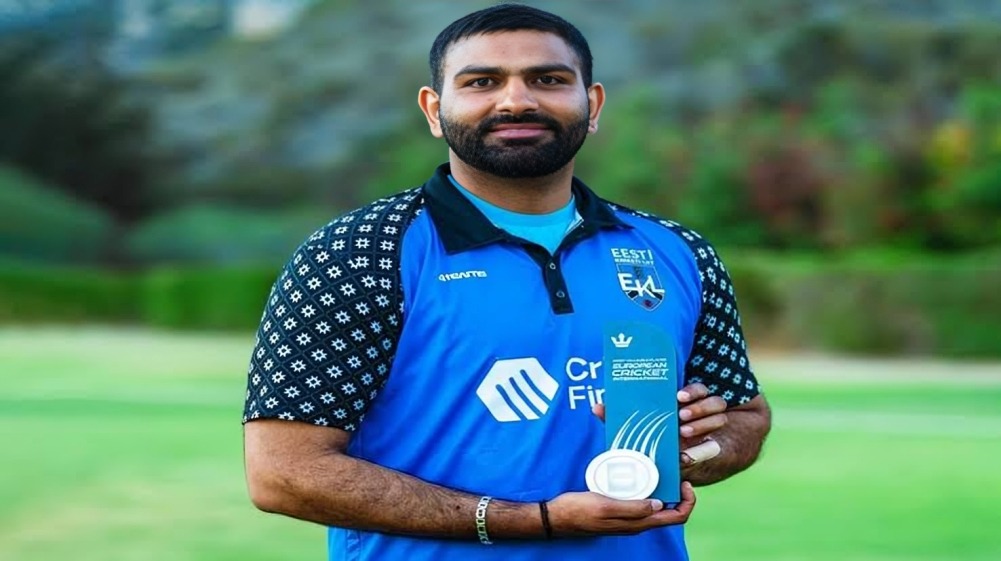
Sahil Chauhan holds the record for the Fastest century in T20 International cricket, reaching 100 runs in just 27 balls for Estonia against Cyprus in 2024.
His innings was an outstanding example of modern T20 batting. Instead of spending a long period building his innings, Chauhan attacked the bowling from the beginning and found the boundary with remarkable frequency.
Reaching a T20I century in only 27 balls means that almost every delivery faced has to produce a significant scoring opportunity. Chauhan’s achievement therefore stands out as one of the most explosive individual performances in international T20 cricket.
The 27-ball mark also gives him a clear advantage over the other players on this list, making his performance the benchmark when discussing the Fastest century in T20.
2. Muhammad Fahad – 29 Balls

Turkey’s Muhammad Fahad occupies second place with a century from 29 balls against Bulgaria.
His performance is another example of how T20 cricket has transformed batting. A century that once seemed almost impossible in a short-format match can now be achieved in fewer than 30 deliveries when a batter finds the right combination of power, timing and boundary hitting.
Fahad’s 29-ball century is only two balls slower than Chauhan’s record, demonstrating just how close the two performances are.
Also Read:- Most Runs in Indian Premier League: Top 5 IPL Run Scorers
3. Jan Nicol Loftie-Eaton – 33 Balls

Namibia’s Jan Nicol Loftie-Eaton reached his century in 33 balls against Nepal, placing him among the fastest T20I century makers.
A 33-ball hundred requires an exceptional scoring rate throughout an innings. Loftie-Eaton’s performance showed the growing attacking approach of international T20 cricket, where batters increasingly look to score boundaries rather than simply accumulate singles and doubles.
His record also places him alongside two other players who reached the century milestone in the same number of deliveries.
4. Sikandar Raza – 33 Balls
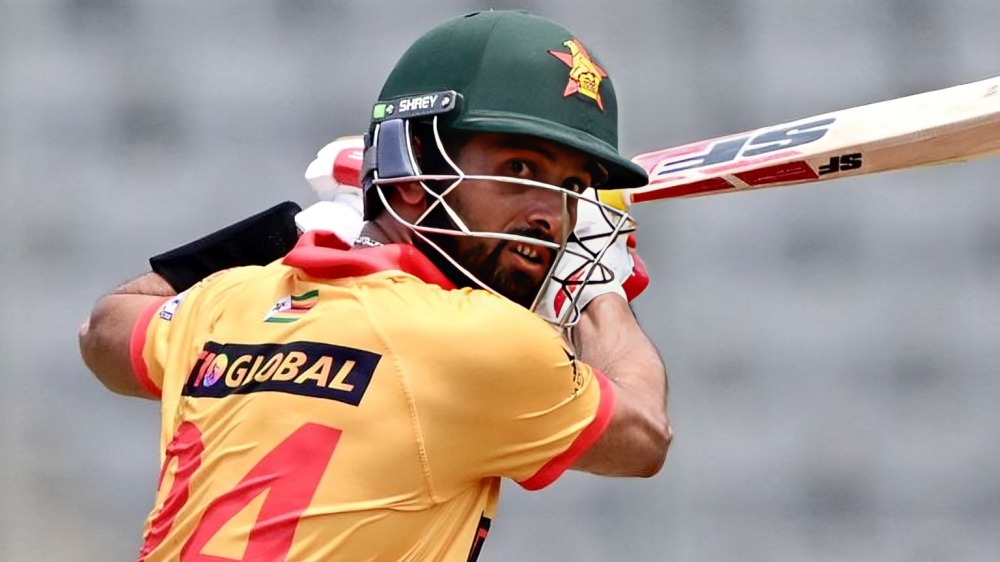
Zimbabwe star Sikandar Raza also scored a T20I century in 33 balls, matching Loftie-Eaton’s mark.
Raza is widely recognized for his all-round ability, and his explosive batting has made him one of Zimbabwe’s most dangerous T20 players. Reaching 100 in 33 deliveries demonstrates his ability to maintain an extremely high scoring rate under pressure.
Although his mark is slower than the current Fastest century in T20, 33 balls remains an extraordinary achievement at international level.
5. Finn Allen – 33 Balls

New Zealand’s Finn Allen completes the top five with a 33-ball century against South Africa at the 2026 T20 World Cup.
Allen is known for his aggressive approach at the top of the New Zealand batting order. His ability to attack from the opening overs makes him particularly suited to T20 cricket, where a fast start can dramatically increase a team’s total.
His 33-ball century puts him level with Loftie-Eaton and Raza and firmly among the fastest T20I century makers.
What Makes a Fast T20 Century So Difficult?
Scoring 100 runs in T20 cricket is difficult because a batter has a limited number of deliveries and must maintain an exceptional scoring rate.
To score a century in fewer than 30 balls, a player needs several factors to work together. Powerful hitting is essential, but timing, shot selection, confidence and the ability to capitalize on scoring opportunities are equally important.
A batter also needs to avoid losing their wicket while maintaining an extremely aggressive approach. One mistake can end the innings before the player reaches the milestone.
This is why the Fastest century in T20 is considered such an impressive individual achievement.
Why T20 Cricket Produces Faster Centuries
T20 cricket has encouraged a completely different approach to batting compared with longer formats. Players are expected to attack from the beginning, particularly during the powerplay when fielding restrictions create more opportunities to hit boundaries.
Modern batsmen also benefit from improved fitness, specialized T20 training, high-quality equipment and extensive analysis of opposition bowlers.
The rise of franchise T20 leagues around the world has further developed aggressive batting techniques. Players regularly practice hitting sixes, manipulating field placements and scoring at extremely high strike rates.
Fastest Century in T20 vs Fastest Century in ODI and Test Cricket
The Fastest century in T20 is naturally expected to require fewer balls than records in longer formats.
T20 cricket gives batsmen greater freedom to attack because the format is designed around a high scoring rate. In contrast, ODI and Test cricket generally provide more opportunities to build an innings over a longer period.
The difference highlights how dramatically batting strategies have evolved across the three formats. In T20 cricket, a player can attempt to score at an extraordinary rate from the first over, whereas traditional cricket formats often require greater patience.
Also Read:- Rohit Sharma’s 264 Runs: The Highest ODI Score by a Player
Frequently Asked Questions
1.Who scored the Fastest century in T20 International cricket?
Sahil Chauhan of Estonia holds the record for the Fastest century in T20 International cricket, reaching 100 runs in 27 balls against Cyprus in 2024.
2.How many balls did Sahil Chauhan take to score his century?
Sahil Chauhan reached his T20I century in just 27 balls, making it the fastest century in the provided T20I record list.
3.Who scored a T20I century in 29 balls?
Muhammad Fahad of Turkey scored a century in 29 balls against Bulgaria, according to the data provided.
4.Is a 27-ball century possible in T20 cricket?
Yes. Sahil Chauhan demonstrated that it is possible at international level when he scored a century in just 27 balls for Estonia against Cyprus in 2024.
Conclusion
The Fastest century in T20 is a record that perfectly represents the explosive nature of modern T20 cricket. Sahil Chauhan’s 27-ball century for Estonia stands at the top of the list, followed by Muhammad Fahad’s 29-ball hundred and the 33-ball centuries from Jan Nicol Loftie-Eaton, Sikandar Raza and Finn Allen.
As T20 cricket continues to evolve, increasingly aggressive batting techniques could produce even faster centuries in the future. For now, however, Chauhan’s 27-ball achievement remains the benchmark in the data covered by this article.